4th of July Cat
A Designer’s First Look: Playful, Patriotic, and Purpose-Built
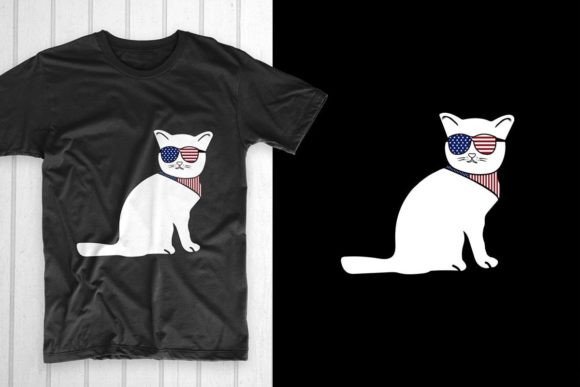
When I opened 4th of July Cat for the first time, I didn’t just see a holiday graphic—I saw a potential embroidered tote bag for a local boutique’s Independence Day pop-up. The cat wears a tiny star-spangled bandana, one paw raised like a salute, and its tail curls into a subtle “USA” curve. It’s not overly detailed, but it’s expressive—friendly enough for baby onesies, bold enough for a sweatshirt front, and clean enough to scale down for an embroidered patch on a denim cap. As a designer who’s stitched hundreds of holiday motifs, I appreciate how this balances whimsy with recognizability. It feels handmade without looking amateurish—exactly the tone small business owners need when building trust with customers.
Where This Design Truly Shines
4th of July Cat works best where personality meets practicality. I recently tested it as a machine embroidery design on a medium-weight cotton canvas tote—no applique, just satin and fill stitch—and the result held up beautifully after two rounds of washing. It’s ideal for:
- Sweatshirt embroidery: The rounded shape fits naturally across the chest or upper back without distortion.
- Baby embroidery: Soft curves and minimal fine lines mean fewer thread breaks on delicate knit fabrics (just use lightweight cutaway stabilizer).
- Embroidered patch: Its self-contained silhouette stitches cleanly, edges stay crisp, and it looks intentional—not like a flattened print.
- Holiday gift items: Think pillow covers, tea towels, or aprons—places where charm matters more than photorealism.
- Craft business merchandise: Etsy sellers can pair it with simple fonts for “Proudly Made in USA” tags or bundle it with red/white/blue thread kits.
It’s also a smart choice for printable mockups. Because the layout is balanced and centered, it translates well into digital previews for online listings—no awkward cropping or last-minute resizing needed.
Where to Proceed with Care
This isn’t a one-size-fits-all embroidery file. While 4th of July Cat is versatile, its success depends on thoughtful execution. Avoid using it on:
- Very small hoop sizes (under 4x4 inches)—the facial details and bandana texture may lose clarity.
- Highly textured or napped fabrics like heavy fleece or terry cloth—the satin stitch can sink in and blur definition.
- Thin or stretchy fabric without proper stabilization—especially for commercial embroidery where consistency matters across dozens of units.
- Dark fabric without contrast testing: The white stars and fine blue outlines need verification against navy or black backgrounds before stitching.
- Curved surfaces like caps unless you’ve confirmed the design’s width fits comfortably within the front panel’s flat area.
I once tried it on a curved baseball cap brim—without adjusting the digitizing tension—and the bandana’s edge puckered slightly. A quick test on scrap fabric would’ve saved that round.
What It Adds to Your Finished Product
As a T-Shirt Designs asset, 4th of July Cat elevates perception—not just of the item, but of your craft business. Customers notice when stitching feels intentional. This design reads as *designed for embroidery*, not adapted from a print. That builds credibility. On personalized gifts, it signals care: a parent ordering a baby onesie with this motif isn’t buying clip art—they’re choosing something warm, seasonal, and hand-crafted in spirit. For boutique branding, it supports a cohesive summer collection without requiring custom illustration. And for Etsy sellers, it’s a low-risk, high-recognition digital embroidery file that converts well during June–July traffic spikes.
Practical Notes Every Embroidery Designer Should Check
Before stitching 4th of July Cat into your next project, take these steps:
- Test on scrap fabric—same type and weight as your final product—to assess stitch density and thread pull.
- Review thread colors in natural light; reds and blues can shift dramatically between spools and monitors.
- Confirm hoop size compatibility; if you work mostly with 5x7 hoops, verify the design fits comfortably with margin for hooping.
- Inspect small details like the star spacing on the bandana—tight clusters may require reduced stitch count or alternate fill angles.
- Try black-and-white mockups to ensure legibility on both light and dark garments.
- Use appropriate stabilizer: medium-weight cutaway for knits, tear-away for stable wovens, and avoid heat-away unless you’ve tested wash durability.
- Verify licensing before selling finished products or bundling the digital embroidery file—commercial use rights aren’t implied by “Print Ready” alone.
Since 4th of July Cat is labeled as a Graphics asset usable across mugs, decals, and card making, double-check whether the embroidery version includes optimized stitch paths—or if it’s a converted SVG that may need digitizing adjustments for dense areas.
Final Thought: A Reliable, Human-Centered Choice
In a sea of generic holiday designs, 4th of July Cat stands out because it respects the maker’s time and the customer’s eye. It doesn’t overpromise detail, but it delivers consistent charm. Whether you’re embroidering a single personalized gift or scaling for a small shop’s summer line, it behaves predictably—and that’s rare. It’s not flashy, but it’s trustworthy. And in handmade product development, that’s the highest compliment you can give a design.